If you’ve ever seen someone type TGIF in a message and wondered what it actually means, you’re not alone.
This short, punchy abbreviation pops up everywhere—from casual texts to Instagram captions and office Slack chats.
People often search for “TGIF meaning in text” because the phrase feels celebratory, but its exact use can change depending on context.
Is it just about Fridays? Can it be sarcastic? Is it still popular in 2026?
In today’s fast-moving digital conversations, abbreviations like TGIF help people express emotion quickly without typing full sentences. Whether you’re chatting with friends, scrolling social media, or trying to keep up with online slang, understanding TGIF helps you stay in the loop.
This guide breaks it all down in simple, clear language—what TGIF means, where it came from, how people use it today, and how you should reply when someone sends it to you.
What Does TGIF Mean in Text & Chat?
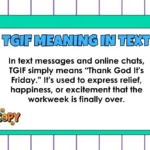
In text messages and online chats, TGIF simply means “Thank God It’s Friday.” It’s used to express relief, happiness, or excitement that the workweek is finally over.
Most of the time, TGIF carries a positive, upbeat tone. People send it when they’re tired from the week and looking forward to rest, fun, or freedom. It doesn’t usually require a deep response—it’s more of a shared feeling than a question.
In casual chats, TGIF can mean:
- Relief after a long week
- Excitement for weekend plans
- Celebration of free time
- A light-hearted mood shift
Sometimes, TGIF is also used humorously or sarcastically, especially if someone still has work to do on Friday. The meaning depends on context, tone, and who’s sending it.
Full Form, Stands For & Short Meaning of TGIF
TGIF stands for:
Thank God It’s Friday
Short meaning in text:
- “Finally, the week is over”
- “I’m happy it’s Friday”
- “Weekend vibes start now”
It’s considered a casual abbreviation, not formal English. You’ll rarely see it in professional emails, but it’s extremely common in friendly chats, captions, and comments.
Quick breakdown:
- T → Thank
- G → God
- I → It’s
- F → Friday
Some people use TGIF without religious intent—it’s more cultural than spiritual in modern usage.
Origin, History & First Known Use of TGIF
The phrase “Thank God It’s Friday” existed long before texting. It became popular in spoken English during the mid-20th century, especially among workers celebrating the end of the workweek.
TGIF gained major cultural attention in:
- Workplace conversations
- Pop culture slogans
- Advertising and entertainment
When texting and internet chat became common, the phrase naturally shortened into TGIF to save time and effort. By the early days of SMS and online forums, TGIF had already become a widely recognized abbreviation.
Over time, its meaning stayed the same—but its reach expanded across social media, memes, and digital culture.
How People Use TGIF in Daily Conversations
TGIF is usually sent on Fridays, often in the afternoon or evening. It’s rarely used on other days unless someone is joking.
Common real-life uses include:
- Messaging coworkers after a long week
- Posting weekend excitement on social media
- Group chats planning Friday night events
Examples of everyday use:
- “Long meetings all week… TGIF 😮💨”
- “We survived! TGIF 🎉”
- “Coffee tastes better today. TGIF!”
It works as:
- A standalone message
- A caption
- A reaction to stress
TGIF Meaning Across WhatsApp, Instagram, TikTok & Snapchat
Although the meaning stays the same, how TGIF is used changes slightly by platform.
- Casual chats with friends or coworkers
- Often paired with emojis
- Example: “Office done. TGIF 😄”
- Used in captions and stories
- Often hashtagged
- Example: “Weekend mode on ✨ #TGIF”
TikTok
- Appears in video captions
- Used for humor or lifestyle content
- Example: “POV: It’s Friday after exams 😌 #TGIF”
Snapchat
- Short, playful snaps
- Often text-over-image
- Example: “Still alive. TGIF 😂”
Different Meanings of TGIF in Other Fields
While rare, TGIF can have alternative meanings outside casual chat:
- Business/Branding: A well-known restaurant brand uses TGIF as a name
- Events & Promotions: “TGIF deals” for Friday discounts
- Office Culture: Casual Fridays or end-week celebrations
However, in texting and social media, the meaning almost always stays Thank God It’s Friday.
Common Confusions, Mistakes & Wrong Interpretations
People sometimes misunderstand TGIF, especially non-native speakers.
Common mistakes:
- Thinking it means “Thank God I’m Free” ❌
- Assuming it’s religious only ❌
- Using it on Monday or Tuesday (confusing timing)
Important tip:
TGIF is time-specific—it makes sense only when Friday is near or has arrived.
Similar Terms, Alternatives & Related Slang
If you want variety, here are common alternatives to TGIF:
- Finally Friday
- Weekend vibes
- Fri-yay 🎉
- It’s Fridayyy
- End of the grind
Internal linking suggestions:
- Link to pages like “LOL meaning in text”
- Link to “SMH meaning in chat”
- Link to “Weekend slang terms”
Examples of TGIF in Real Chat Situations
Quick, natural chat examples:
- “That deadline drained me… TGIF 😩➡️😄”
- “Movie night + pizza = TGIF 🍕🎬”
- “Alarm off tomorrow. TGIF 🙌”
- “Still got work but… TGIF I guess 😅”
How to Reply When Someone Says TGIF
Simple reply ideas:
- “Finally! 🙌”
- “Same here 😂”
- “Weekend plans?”
- “We made it 🎉”
- “About time 😮💨”
Match their energy—happy, tired, or sarcastic.
Is TGIF Still Popular? Trends & Online Usage
Yes, TGIF is still popular, especially on:
- Fridays
- Social media
- Work-related chats
While newer slang comes and goes, TGIF stays relevant because:
- The workweek still exists
- Fridays still feel good
- The phrase is short and expressive
It may not be trendy slang, but it’s timeless internet shorthand.
FAQs
1. What does TGIF mean in texting?
It means “Thank God It’s Friday,” showing relief or excitement.
2. Is TGIF formal or informal?
Informal—best for casual chats and social media.
3. Can TGIF be sarcastic?
Yes, especially if someone is still stressed on Friday.
4. Is TGIF still used today?
Yes, very commonly, especially online.
5. Can I use TGIF at work?
Only in casual or friendly workplace chats.
Conclusion
TGIF is one of those internet abbreviations that refuses to fade away—and for good reason. It captures a universal feeling: relief, happiness, and anticipation of rest.
Whether you see it in a quick text, a funny meme, or a social media caption, the TGIF meaning in text stays simple and relatable.
It’s short, expressive, and instantly understood across cultures and platforms. While new slang constantly pops up, TGIF remains a digital classic tied to something everyone loves—the end of the workweek.
Now that you know how it’s used, when to reply, and what it really means, you can join the Friday energy with confidence.
So next time someone texts “TGIF,” you’ll know exactly what vibe they’re sending.