If you’ve ever seen someone reply with “wtv” in a text or comment and thought, “Wait… what does that mean?”—you’re not alone.
The phrase pops up everywhere: chats, DMs, comments, and even arguments online.
People search for wtv meaning in text because the tone can feel confusing. Is it rude? Is it casual? Is it dismissive—or just lazy typing?
In reality, wtv is a short, flexible slang term that changes meaning based on context, tone, and relationship.
It’s commonly used by teens, Gen Z, and fast typers who want to keep conversations quick and informal.
This article breaks down exactly what wtv means, where it came from, how people actually use it, and how you should reply when you see it. Simple explanations, real chat examples, and zero fluff—let’s decode it.
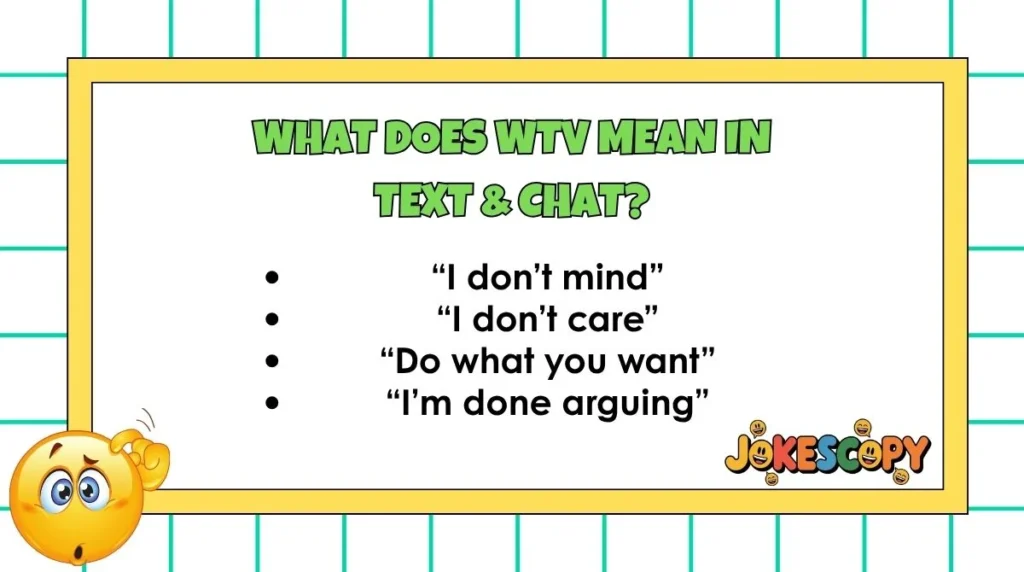
What Does WTV Mean in Text & Chat?
In text messages and online chats, wtv is a shortened form of “whatever.” It’s used to show indifference, agreement without enthusiasm, or emotional distance.
The key thing to understand is that wtv doesn’t have one fixed tone. It can sound relaxed, annoyed, sarcastic, or neutral—depending on the situation.
Common meanings in chats:
- “I don’t mind”
- “I don’t care”
- “Do what you want”
- “I’m done arguing”
Tone matters more than the word itself. A close friend saying “wtv 😂” feels very different from someone replying with just “wtv.”
Quick examples:
- “Pizza or burgers?” → “wtv works”
- “You never listen.” → “wtv.”
- “We can meet at 6 or 7.” → “wtv tbh”
Short, fast, and emotion-packed—wtv is modern digital shorthand at work.
Full Form, Stands For & Short Meaning of WTV
WTV stands for: Whatever
That’s it—no hidden acronym, no secret slang origin. It’s simply a compressed version of a very common English word.
Why people shorten “whatever” to wtv:
- Faster typing
- Casual texting style
- Fits character limits
- Feels emotionally detached
Short meanings of wtv:
- “I’m okay with anything”
- “I don’t want to discuss this”
- “It’s not important to me”
Important note:
While “whatever” can sound dismissive in spoken English, wtv often feels even colder in text because there’s no vocal tone to soften it.
Origin, History & First Known Use of WTV
The word “whatever” has existed in English for centuries, but wtv is a product of digital culture.
Timeline:
- Early 2000s: Texting shortcuts emerge (brb, lol, idk)
- Late 2000s: “Whatever” becomes a sarcastic teen phrase
- 2010s: wtv appears in online chats and gaming
- 2020s: Widely used across social media platforms
wtv grew popular alongside:
- SMS character limits
- Instant messaging apps
- Meme and reaction culture
It reflects a shift toward minimal-effort communication, where tone is implied rather than explained.
How People Use WTV in Daily Conversations
People don’t usually use wtv in formal messages. It lives in casual, emotional, or fast-moving conversations.
Common usage styles:
1. Neutral agreement
- “We can watch a movie or go out.”
- “wtv, I’m free.”
2. Emotional shutdown
- “You never take this seriously.”
- “wtv.”
3. Passive acceptance
- “I already booked the tickets.”
- “wtv, it’s fine.”
4. Sarcastic dismissal
- “You think that’ll work?”
- “wtv 🙄”
Context + emoji = meaning.
WTV Meaning Across WhatsApp, Instagram, TikTok & Snapchat
Although the meaning stays similar, platform culture changes how wtv feels.
- Often sounds serious or annoyed
- Used in personal chats or arguments
- Appears in comments or DMs
- Can feel sarcastic or playful
- Example: “wtv, still looks cool 😌”
TikTok
- Used ironically or humorously
- Often part of jokes or trends
Snapchat
- Short replies = emotional signals
- “wtv” may mean boredom or disinterest
Same word—different vibes.
Different Meanings of WTV in Other Fields
Outside texting, WTV can mean other things depending on context:
- Broadcasting: Call sign for TV stations
- Technical use: Abbreviation in internal notes
- Gaming chats: Still usually “whatever”
But in casual text conversations, 99% of the time—it means whatever.
Common Confusions, Mistakes & Wrong Interpretations
People often misunderstand wtv, which leads to unnecessary conflict.
Common mistakes:
- Assuming it’s always rude ❌
- Using it in professional messages ❌
- Replying emotionally without context ❌
What it usually is:
- A mood indicator
- A shortcut, not an insult
- A signal of low emotional energy
If unsure, ask for clarification instead of reacting.
Similar Terms, Alternatives & Related Slang
If you want alternatives to wtv, here are common ones:
- IDC – I don’t care
- IDM – I don’t mind
- NM – Not much
- Up to you
- Doesn’t matter
👉 Internal linking tip: Link this section to related pages like “IDC meaning in text” or “IDK slang explained.”
Examples of WTV in Real Chat Situations
Casual
- “Want coffee or tea?”
- “wtv 😊”
Argument
- “You’re not listening.”
- “wtv.”
Sarcasm
- “This plan will totally fail.”
- “wtv 🙃”
Friendly
- “We can hang tomorrow.”
- “wtv works for me!”
How to Reply When Someone Says WTV
Your reply should match their tone.
Safe replies:
- “Okay 👍”
- “All good”
- “Let me know if you care later”
If it feels cold:
- “You seem upset—everything okay?”
- “Did I say something wrong?”
Mirroring energy prevents drama.
Is WTV Still Popular? Trends & Online Usage
Yes—wtv is still widely used, especially among:
- Gen Z
- Casual texters
- Social media users
However, newer slang is more expressive. People now often add emojis or extra words to soften wtv, like:
- “wtv lol”
- “wtv tbh”
- “wtv 😂”
Minimalism is evolving—but wtv isn’t gone.
FAQs
1. Is wtv rude in texting?
Not always. It depends on tone and context.
2. Does wtv mean I don’t care?
Sometimes, yes—but it can also mean “I’m okay with anything.”
3. Can I use wtv with friends?
Yes, especially in casual chats.
4. Is wtv professional?
No. Avoid it in work or formal messages.
5. What’s a nicer alternative to wtv?
“Up to you” or “I don’t mind.”
Conclusion
So, what’s the real wtv meaning in text? At its core, it simply means “whatever”, but the emotion behind it changes with context, tone, and relationship.
It can signal calm agreement, emotional shutdown, sarcasm, or pure indifference. That’s why people often misread it.
Understanding how, where, and why someone uses wtv helps you respond smarter—and avoid unnecessary tension.
When in doubt, look at the conversation flow, emojis, and timing. Slang like wtv isn’t about grammar—it’s about mood. Use it wisely, read it carefully, and you’ll stay fluent in modern digital conversations.