If you’ve ever received a message that simply says “alr” and paused for a second, you’re not alone.
The term alr meaning in text is something many people search for because it appears often in casual chats, comments, and social media replies.
Short forms like this move fast online, and if you’re not familiar with them, they can feel confusing or even rude.
“ALR” is part of modern digital language where speed matters more than perfect spelling.
People use it to save time, sound relaxed, or keep conversations flowing without typing full words. You’ll see it everywhere—from private messages to public comment sections.
In this guide, we’ll break down what ALR means, where it came from, how people use it today, and how you should reply when someone sends it to you.
What Does ALR Mean in Text & Chat?
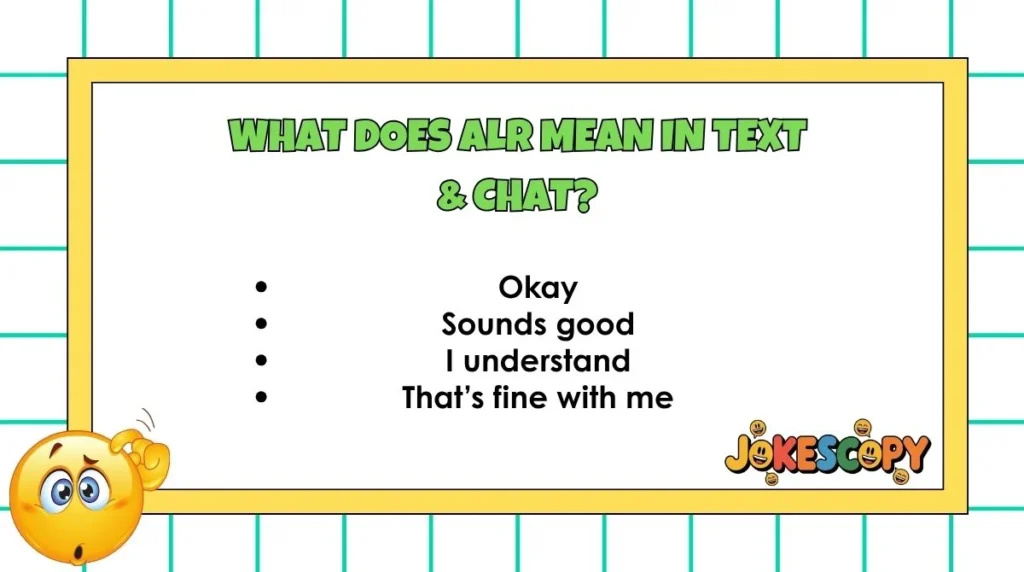
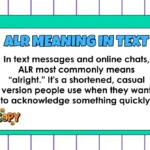
In text messages and online chats, ALR most commonly means “alright.” It’s a shortened, casual version people use when they want to acknowledge something quickly.
When someone types alr, they’re usually saying:
- Okay
- Sounds good
- I understand
- That’s fine with me
The tone depends on context. Sometimes it sounds friendly and relaxed. Other times, it can feel neutral or even slightly dismissive if used alone. For example, replying with just “alr” may feel shorter or less enthusiastic than “alright!”
People prefer ALR because it’s fast and informal. It fits perfectly in quick conversations where long responses aren’t needed. Just like “ok,” “kk,” or “sure,” it’s all about efficiency. Understanding the alr meaning in text helps you read the tone correctly and avoid misunderstandings.
Full Form, Stands For & Short Meaning of ALR
The full form of ALR is simply:
ALR = Alright
It doesn’t stand for a phrase or acronym made of multiple words. Instead, it’s a phonetic shortening—people removed vowels to type faster.
Short meanings of ALR:
- Alright
- Okay
- Agreed
- Fine with me
Unlike formal abbreviations, ALR doesn’t have an official definition. Its meaning depends on how and where it’s used. In friendly chats, it sounds casual and normal. In serious conversations, it may come across as cold or rushed.
Because it’s informal, ALR is best used with friends, peers, or casual online interactions—not in professional emails or formal messages.
Origin, History & First Known Use of ALR
The rise of ALR is closely tied to texting culture and early internet chat rooms. As mobile phones gained popularity, people began shortening words to save time and effort.
“All right” became “alright,” then “aight,” and eventually “alr.” Each version got shorter as typing speed became more important than grammar.
While there’s no exact date for the first use, ALR became more common in the 2010s with:
- Instant messaging apps
- Online gaming chats
- Social media comments
It spread naturally, not through dictionaries, but through everyday users copying each other’s texting habits.
How People Use ALR in Daily Conversations
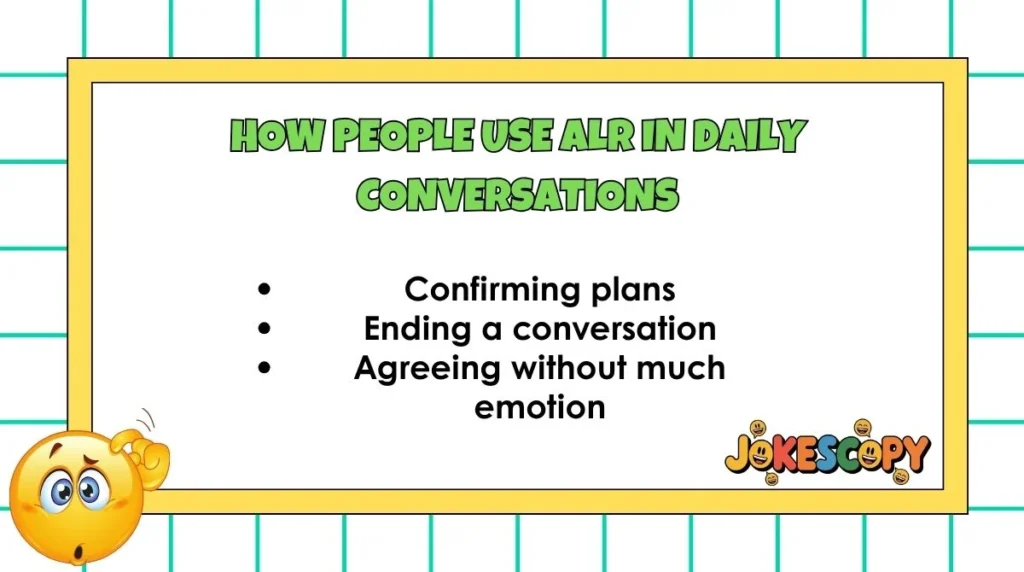
In daily chats, ALR works as a quick acknowledgment. People often use it when:
- Confirming plans
- Ending a conversation
- Agreeing without much emotion
Common examples:
- “Meet at 7?” → “alr”
- “I’ll call you later” → “alr 👍”
- “Do it your way” → “alr”
It’s usually not meant to be rude—but adding emojis or extra words can make it sound warmer.
ALR Meaning Across WhatsApp, Instagram, TikTok & Snapchat
The alr meaning in text stays mostly the same across platforms, but tone can change.
- WhatsApp: Casual agreement or acknowledgment
- Instagram: Short replies in DMs or comments
- TikTok: Often used in comments, sometimes sarcastic
- Snapchat: Quick response, often neutral
On visual platforms, ALR may feel more dry because there’s less context—so emojis help.
Different Meanings of ALR in Other Fields
Outside texting, ALR can mean different things:
- Aviation: Above Landing Reference
- Medicine: Acute Leukemia in Relapse
- Technology: Automatic Load Regulation
These meanings are unrelated to texting and are used only in specific professional contexts.
Common Confusions, Mistakes & Wrong Interpretations
People often misunderstand ALR because it’s short.
Common mistakes:
- Thinking it means “already”
- Assuming it’s rude every time
- Using it in formal writing
Context matters. A single-word reply may seem cold, but it’s not always negative.
Similar Terms, Alternatives & Related Slang
If you don’t want to use ALR, here are alternatives:
- Ok
- Okay
- Sure
- Got it
- Aight
- Kk
👉 Internal linking suggestion: Link to related pages like “OK meaning in text”, “Aight meaning slang”, or “BRB meaning”.
Examples of ALR in Real Chat Situations
- “I’ll send the file later.” → alr 😊
- “We’re leaving now.” → alr
- “Let’s talk tomorrow.” → alr sounds good
Short, simple, and casual.
How to Reply When Someone Says ALR
Your reply depends on tone:
- If friendly → “👍” or “cool!”
- If neutral → “ok” or “see you”
- If conversation-ending → no reply needed
Mirror their energy to keep things smooth.
Is ALR Still Popular? Trends & Online Usage
Yes, ALR is still widely used, especially among younger users. While newer slang comes and goes, ALR remains popular because it’s simple, flexible, and easy to type. It’s not trending—but it’s stable.
FAQs
1. What does ALR mean in texting?
It means alright or okay.
2. Is ALR rude?
Not usually, but it can sound dry without emojis.
3. Is ALR the same as “already”?
No, that’s a common misunderstanding.
4. Can I use ALR professionally?
No, it’s too informal.
5. Is ALR still used in 2025?
Yes, especially in casual chats.
Conclusion
Understanding the alr meaning in text makes online conversations much easier to read and respond to.
At its core, ALR is just a fast, informal way of saying alright. It’s not meant to be rude, confusing, or complicated—context does all the work.
Whether you see it on WhatsApp, Instagram, or Snapchat, the meaning stays mostly the same.
Just remember that tone matters, and adding emojis or extra words can make responses feel warmer.
As digital language keeps evolving, knowing small terms like ALR helps you stay confident, connected, and fluent in everyday online communication.