You’ve probably seen “DND” pop up in a text message, chat app, or social media bio and wondered what it actually means.
You’re not alone—“dnd meaning in text” is a common search because the abbreviation can feel confusing without context.
Sometimes it signals someone is busy, other times it’s a phone setting, and in rare cases, it can even mean something completely different.
In today’s fast-paced digital world, people shorten everything to save time. Acronyms like DND help users communicate quickly without typing full sentences.
But if you misunderstand it, you might reply at the wrong time—or not reply at all.
This guide breaks down DND meaning in text in a simple, friendly way. You’ll learn what it stands for, where it came from, how people use it across apps like WhatsApp and Instagram, and how to respond naturally when someone says it.
What Does DND Mean in Text & Chat?
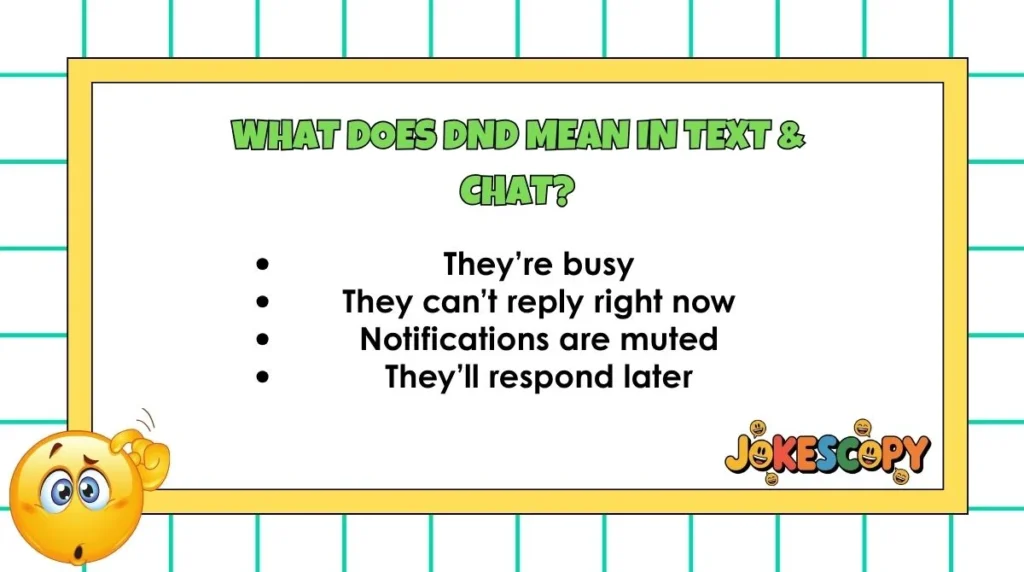
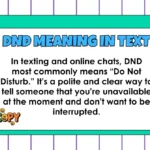
In texting and online chats, DND most commonly means “Do Not Disturb.” It’s a polite and clear way to tell someone that you’re unavailable at the moment and don’t want to be interrupted.
When someone uses DND in a message, they’re usually saying:
- They’re busy
- They can’t reply right now
- Notifications are muted
- They’ll respond later
DND is not rude by default. In fact, it’s often considered respectful because it sets boundaries instead of leaving messages on read.
Short meaning in text:
- DND = Do Not Disturb
- Implies temporary unavailability
- Often paired with time context
Quick chat examples:
- “In a meeting rn, DND 🚫”
- “Phone on DND, will text later”
- “Putting myself on DND for an hour 😴”
The tone depends on how it’s used. With emojis or extra words, it feels friendly. Without context, it can sound blunt—but not aggressive.
Full Form, Stands For & Short Meaning of DND
Let’s break it down clearly and simply.
Full form:
- DND = Do Not Disturb
What it stands for:
- A request not to receive messages, calls, or notifications
- A digital boundary marker
Short meaning:
- “I’m busy”
- “Don’t message me right now”
- “Notifications are off”
Originally, DND was a phone feature, not slang. Over time, people started using the same phrase in texts and chats to explain their status without typing long explanations.
Common short uses:
- “On DND”
- “Going DND”
- “Still DND”
- “DND mode”
These shortened forms are widely understood, especially among younger users and frequent texters.
Origin, History & First Known Use of DND
The phrase “Do Not Disturb” existed long before texting. It first appeared in physical spaces—most famously as “Do Not Disturb” signs in hotels, asking guests or staff not to interrupt.
Later, the term moved into technology:
- Early mobile phones introduced DND mode
- Landline phones had DND call-blocking features
- Smartphones popularized it globally
As texting culture grew, users began typing “DND” instead of explaining:
- “I’m busy”
- “I can’t reply right now”
- “I’ve muted notifications”
Social media and messaging apps helped DND evolve from a setting into casual digital slang. Today, it’s both a technical feature and a conversational shortcut.
How People Use DND in Daily Conversations
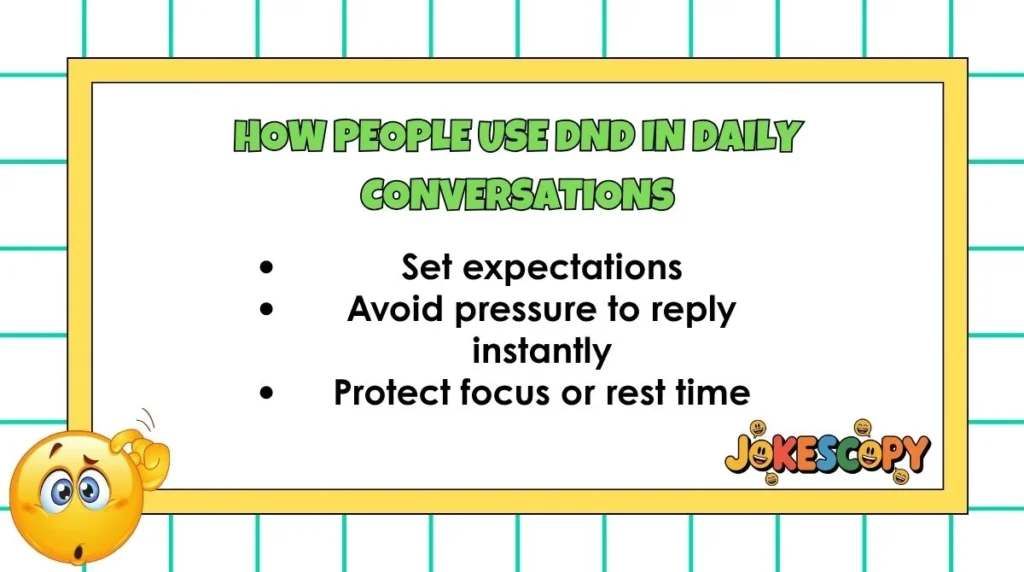
In everyday texting, DND is usually used before or during unavailability, not after.
People use it to:
- Set expectations
- Avoid pressure to reply instantly
- Protect focus or rest time
Typical daily uses:
- Work or meetings
- Studying or exams
- Sleeping or resting
- Driving or traveling
- Mental health breaks
Natural chat examples:
- “Going DND till dinner 🍽️”
- “DND for 2 hours, talk soon”
- “If I don’t reply, I’m on DND”
It’s often paired with a time frame, which makes it feel considerate rather than dismissive.
DND Meaning Across WhatsApp, Instagram, TikTok & Snapchat
While the meaning stays the same, how DND is used varies slightly by platform.
- Used in status or chats
- Often means notifications are muted
- Example: “On DND, urgent calls only”
- Appears in bios or DMs
- Signals low availability
- Example: “DND unless important”
TikTok
- Used in captions or comments
- Sometimes dramatic or humorous
- Example: “DND, social battery at 1% 🔋”
Snapchat
- Casual and short
- Example: “DND rn 😴”
Across all platforms, DND meaning in text stays consistent—don’t disturb me right now.
Different Meanings of DND in Other Fields
Although “Do Not Disturb” is the most common meaning in texting, DND can mean other things in different contexts.
Other meanings include:
- Dungeons & Dragons (gaming)
- Do Not Delete (tech or email context)
- Department of National Defence (official use)
⚠️ Context matters. In casual chats, DND almost always means Do Not Disturb, not the alternatives.
Common Confusions, Mistakes & Wrong Interpretations
People sometimes misunderstand DND, leading to awkward moments.
Common mistakes:
- Thinking DND means “ignoring you”
- Assuming it’s permanent
- Confusing it with being blocked
What DND does NOT mean:
- Anger
- Disrespect
- Ending a conversation
If you’re unsure, context clues help:
- Emojis soften tone 😊
- Time frames show intention
- Follow-up messages clarify availability
Similar Terms, Alternatives & Related Slang
If you don’t want to use DND, there are plenty of alternatives.
Similar phrases:
- BRB (Be Right Back)
- AFK (Away From Keyboard)
- Busy rn
- On mute
- Offline for a bit
Related slang:
- Ghost mode 👻
- Low battery (socially)
- Taking a break
👉 Internal linking suggestion:
Link to related pages like “AFK meaning in text”, “BRB full form”, or “IMO meaning in chat”.
Examples of DND in Real Chat Situations
Quick, realistic examples you might actually see:
- “Hey, on DND till my exam ends 📚”
- “Putting phone on DND, call if urgent”
- “Sorry if I’m slow, DND mode”
- “DND tonight, self-care time 💆♀️”
These short messages feel natural and polite.
How to Reply When Someone Says DND
Your response should respect their boundary.
Good replies:
- “No worries, talk later 😊”
- “Got it 👍”
- “Okay, ping me when free”
Avoid:
- Repeated messages
- Guilt-tripping
- Demanding replies
A respectful response builds trust and keeps conversations healthy.
Is DND Still Popular? Trends & Online Usage
Yes—DND is more popular than ever.
Why?
- Remote work culture
- Mental health awareness
- Notification overload
- Always-online fatigue
People now openly communicate availability instead of disappearing. DND has become a normal, healthy digital boundary, not a cold signal.
FAQs
1. What does DND mean in texting?
It means “Do Not Disturb,” signaling temporary unavailability.
2. Is DND rude in messages?
No. It’s usually polite and respectful.
3. Can DND mean something else?
Yes, but in chats it almost always means Do Not Disturb.
4. How long does DND last?
It depends on the person—sometimes minutes, sometimes hours.
5. Should I reply when someone says DND?
Yes, a short respectful reply is fine.
Conclusion
Understanding the DND meaning in text helps you communicate better and avoid misunderstandings in today’s digital conversations.
At its core, DND simply means “Do Not Disturb”—a clear, polite way to say someone is unavailable right now.
It’s not about ignoring people; it’s about setting healthy boundaries in a world full of constant notifications.
From WhatsApp to Instagram and beyond, DND has become a normal part of online language.
Knowing when and how it’s used—and how to respond—makes you a better, more considerate communicator.
Next time you see DND in a message, you’ll know exactly what it means and how to handle it smoothly.