If you spend even a little time online, you’ve probably seen the word FOMO pop up in texts, comments, or social media captions.
People search for “FOMO meaning in text” because the term shows up everywhere—yet its meaning isn’t always explained clearly.
One minute it’s about missing a party, the next it’s tied to social media, trends, or even shopping habits.
In texting and chat culture, FOMO is short, emotional, and relatable. It captures that uncomfortable feeling when you think others are having fun without you.
As digital communication grows faster and more casual, abbreviations like FOMO help people express complex emotions in just four letters.
This article breaks down exactly what FOMO means in text, where it came from, how people use it today, and how you should respond when someone sends it to you.
What Does FOMO Mean in Text & Chat?
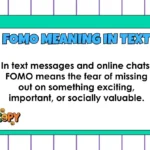
In text messages and online chats, FOMO means the fear of missing out on something exciting, important, or socially valuable. It’s usually used when someone feels left out or worried that others are enjoying an experience without them.
Unlike formal definitions, the texting meaning of FOMO is emotional and casual. It often shows regret, curiosity, or anxiety—sometimes even humor. When someone texts “I’ve got FOMO,” they’re saying they feel uneasy because they think they’re missing something fun or meaningful.
In chats, FOMO is often used:
- When friends make plans without someone
- During events, parties, or trips
- When people see posts on social media
- While talking about trends, sales, or limited offers
FOMO in text doesn’t always mean serious distress. Many people use it lightly or jokingly to express curiosity or playful jealousy. Context and tone matter a lot.
Full Form, Stands For & Short Meaning of FOMO
FOMO stands for Fear Of Missing Out.
Short meaning in text:
A feeling of anxiety or unease caused by thinking you’re missing something others are enjoying.
In texting culture:
- It’s written in all caps or lowercase (fomo)
- It rarely needs explanation
- It’s understood across age groups
Because it’s short and expressive, FOMO fits perfectly into modern texting, where people prefer quick emotional signals over long explanations.
Origin, History & First Known Use of FOMO
The concept behind FOMO existed long before the internet, but the term itself gained popularity in the early 2000s. It was first used in discussions about social behavior, decision-making, and anxiety linked to choices.
FOMO exploded in popularity with the rise of:
- Social media platforms
- Smartphones
- Real-time updates and notifications
Once people could constantly see what others were doing, the fear of being left out became more visible—and more common. Texting and chat apps helped shorten the phrase into an acronym that spread fast.
By the 2010s, FOMO became a mainstream slang term used daily in messages, captions, and memes.
How People Use FOMO in Daily Conversations
In everyday texting, FOMO is used casually and emotionally. People often send it to explain why they feel restless, curious, or tempted to join something.
Common situations include:
- Friends hanging out without you
- Events you couldn’t attend
- Online trends you haven’t tried yet
- Limited-time deals or offers
It’s rarely formal and often paired with emojis or humor to soften the feeling.
FOMO Meaning Across WhatsApp, Instagram, TikTok & Snapchat
Although the meaning stays the same, the usage style changes slightly across platforms.
- WhatsApp: Personal and emotional
“Seeing your pics gave me FOMO 😩” - Instagram: Visual and lifestyle-based
“Weekend trip FOMO hits hard” - TikTok: Trend-driven and playful
“This trend gave me FOMO so I tried it” - Snapchat: Real-time and casual
“Your snaps = instant FOMO 😂”
Across platforms, FOMO often reacts to what others are posting right now.
Different Meanings of FOMO in Other Fields
While texting uses FOMO casually, other fields take it more seriously.
- Psychology: Anxiety linked to social comparison
- Marketing: A strategy using urgency and scarcity
- Finance: Fear-driven investment decisions
- Work culture: Pressure to stay constantly connected
Even though the core idea stays the same, texting keeps the meaning lighter and more relatable.
Common Confusions, Mistakes & Wrong Interpretations
People sometimes misunderstand FOMO. Common mistakes include:
- Thinking it means jealousy only
- Using it for physical fear (it’s emotional)
- Assuming it’s always serious anxiety
FOMO is not:
- A phobia
- A medical condition
- Always negative
In texts, it’s often playful or exaggerated.
Similar Terms, Alternatives & Related Slang
If you want variety, here are similar slang terms:
- OMO – Opposite of missing out
- JOMO – Joy of missing out
- Left out
- Feeling behind
- Out of the loop
👉 Internal linking tip: You can link this section to articles like “JOMO meaning in text”, “OMO slang meaning”, or “common internet abbreviations”.
Examples of FOMO in Real Chat Situations
- “Everyone’s at the party and I’m home… major FOMO 😭”
- “Your vacation pics gave me FOMO”
- “I skipped the event and now I have FOMO”
- “Limited sale? Instant FOMO 💸”
These examples show how flexible and emotional the term is.
How to Reply When Someone Says FOMO
Your reply depends on tone:
- Reassuring:
“Don’t worry, we’ll do it again 😊” - Playful:
“You should’ve come 😂” - Supportive:
“Next time you’re definitely joining!” - Honest:
“It was fun, but not as inexplicable as it looks”
Responding kindly helps reduce the negative feeling behind FOMO.
Is FOMO Still Popular? Trends & Online Usage
Yes—FOMO is still extremely popular. While newer slang appears every year, FOMO remains relevant because it reflects modern digital life.
Why it’s still used:
- Social media keeps growing
- People constantly compare experiences
- Events and trends move fast
Even as language evolves, FOMO continues to describe a feeling many people recognize instantly.
FAQs
1. What does FOMO mean in texting?
It means feeling anxious or uneasy about missing out on something others are doing.
2. Is FOMO slang or a real word?
It’s slang that has become widely accepted and even used in professional discussions.
3. Is FOMO always negative?
No. In texts, it’s often playful or light-hearted.
4. Can FOMO be used jokingly?
Yes, very often—especially with emojis.
5. What is the opposite of FOMO?
JOMO, which means Joy of Missing Out.
Conclusion
The FOMO meaning in text goes far beyond a simple acronym.
It captures a modern emotion shaped by social media, fast communication, and constant updates.
In chats and messages, FOMO is a quick way to express curiosity, regret, or playful jealousy without over-explaining.
Its flexibility makes it useful across platforms like WhatsApp, Instagram, TikTok, and Snapchat.
Understanding FOMO helps you read conversations better and respond more thoughtfully.
Whether someone is joking, feeling left out, or simply reacting to a post, those four letters carry emotional weight.
As long as people compare experiences online, FOMO will remain a familiar and powerful part of texting culture.