If you’ve ever seen someone type DTF in a text message or on social media and paused like, “Wait… what does that actually mean?”—you’re not alone.
The phrase DTF meaning in text is searched constantly because it shows up in casual chats, dating apps, memes, and online conversations where context isn’t always clear.
Sometimes it’s playful, sometimes bold, and sometimes… awkward if misunderstood 😅.
DTF is a slang abbreviation, and like many internet terms, its meaning depends heavily on how and where it’s used.
For some people, it’s just modern shorthand. For others, it carries strong adult implications. That’s why understanding its full meaning, origin, and usage is important—especially before replying.
In this guide, we’ll break down what DTF means in text, where it came from, how people use it today, and how to respond without people . Let’s decode it clearly and simply.
What Does DTF Mean in Text & Chat?
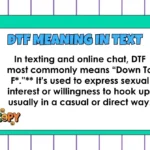
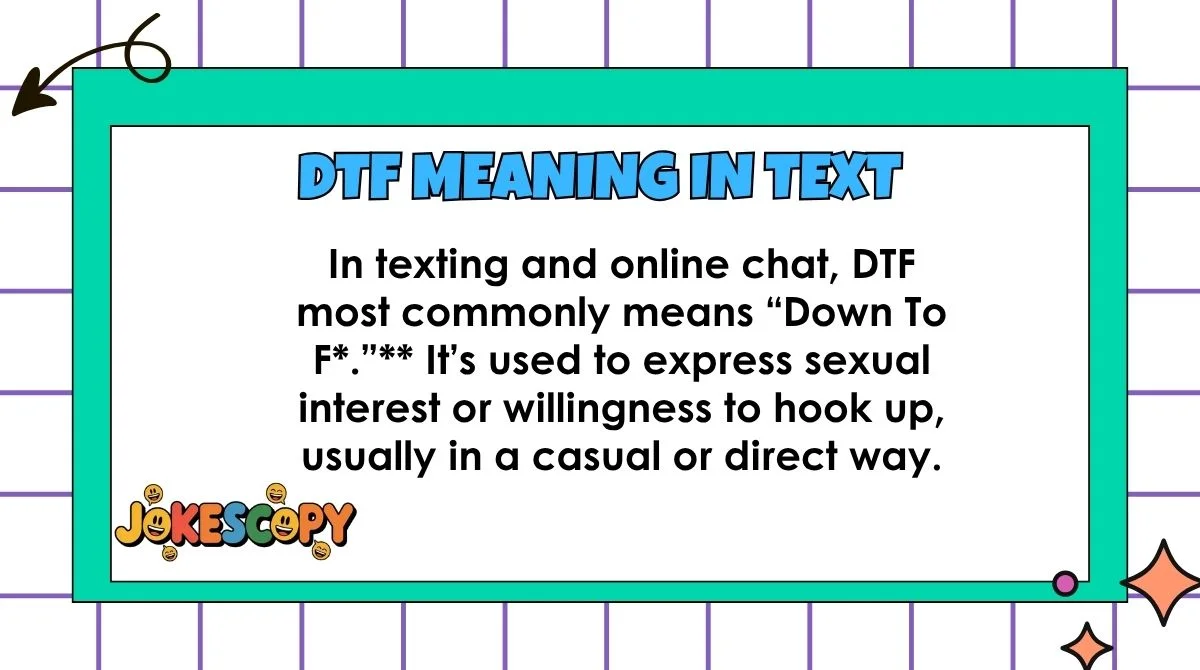
In texting and online chat, DTF most commonly means “Down To F*.”** It’s used to express sexual interest or willingness to hook up, usually in a casual or direct way.
However, the meaning can shift slightly depending on:
- Who’s saying it
- The platform (dating app vs. group chat)
- The tone of the conversation
In most cases, DTF is not subtle. It’s straightforward slang that signals attraction or openness to intimacy.
Short Meaning in Simple Words
- Interested in hooking up
- Open to something physical
- Sexually available or curious
Because it’s bold, DTF is usually used among adults who already understand internet slang.
Full Form, Stands For & Short Meaning of DTF
DTF = Down To F*
Here’s how people usually interpret it:
- Down To → Willing, open, interested
- F* ** → Sexual activity (explicit slang)
Quick Breakdown
- Full form: Down To F*
- Category: Internet slang / texting abbreviation
- Tone: Casual, bold, adult
- Usage: Mostly informal conversations
Sometimes people jokingly replace the last word with something innocent (like “Down To Food”), but that’s usually sarcasm or context-based humor.
Origin, History & First Known Use of DTF
The slang DTF gained mainstream popularity in the early 2000s, especially with the rise of:
- SMS texting
- Online dating websites
- Reality TV and pop culture
One major boost came from dating shows and hookup culture references, where direct language became normalized. As texting shortened phrases for speed, DTF stuck because it was:
- Short
- Clear (to insiders)
- Easy to type
Over time, social media platforms and dating apps made it even more common. By the 2010s, DTF was widely understood among younger internet users.
How People Use DTF in Daily Conversations
People rarely use DTF in formal conversations. It’s mostly found in:
- Private messages
- Flirty chats
- Dating app bios or DMs
Common Ways It Appears
- As a question
- As a people
- As a joke or meme
Examples
- “Are you DTF tonight?” 😏
- “Not looking for anything serious, just DTF vibes.”
- “He was way too DTF for me.”
Tone matters. Without context, it can come off as rude or too direct.
DTF Meaning Across WhatsApp, Instagram, TikTok & Snapchat
While the core meaning stays the same, platform culture changes how DTF feels.
- Used in private chats
- Often direct and intentional
- Can feel intense if unexpected
- Seen in DMs or people
- Sometimes joking or flirty
- Can be risky if misunderstood
TikTok
- Often used humorously
- Memes and skits tone it down
- Sometimes censored or implied
Snapchat
- Very common in casual flirting
- Disappearing messages make it feel bolder
- Often paired with emojis 😈🔥
Different Meanings of DTF in Other Fields
While slang dominates, DTF can mean different things in non-texting contexts:
- Printing: Direct To Film (DTF printing)
- Fitness: Down To Fitness (rare, informal)
- Business/Internal Slang: Team-specific meanings
⚠️ Important: In texting and chat, the slang meaning is almost always assumed unless clearly stated otherwise.
Common Confusions, Mistakes & Wrong Interpretations
Many people misunderstand DTF, especially non-native speakers or older users.
Common Mistakes
- Thinking it’s harmless slang
- Using it in professional chats ❌
- Assuming it always means a joke
Why Confusion Happens
- No tone in text
- Different age groups interpret it differently
- Some use it ironically
When unsure, ask for clarification instead of assuming.
Similar Terms, Alternatives & Related Slang
If you’re seeing DTF, you might also see these related terms:
- Hook up
- Netflix and chill
- FWB (Friends with benefits)
- Casual
- No strings attached
👉 Internal linking tip: You can link this article to pages like “FWB meaning in text”, “Netflix and chill slang meaning”, or “Common dating abbreviations explained.”
Examples of DTF in Real Chat Situations
Here are realistic examples with tone cues:
- “So… are you DTF or nah?” 😅
- “He said he’s DTF but I’m not ready.”
- “That message was way too DTF for a first chat.”
- “Not DTF, just here to talk 😊”
Short, clear, and context-heavy.
How to Reply When Someone Says DTF
Your reply depends on comfort and intent.
If You’re Interested
- “Yeah, maybe 😏”
- “Depends… tell me more 😉”
If You’re Not Interested
- “Not my thing, sorry.”
- “I’m looking for something different.”
If You’re Unsure
- “What do you mean by that?”
- “I don’t really use that term.”
Clear responses avoid awkward follow-ups.
Is DTF Still Popular? Trends & Online Usage
Yes—DTF is still widely used, but its tone has evolved.
Current Trends
- More common in dating apps than public posts
- Often joked about rather than stated directly
- Younger users sometimes replace it with softer slang
It’s not disappearing, but people are becoming more context-aware when using it.
FAQs:
1. What does DTF mean in texting?
It usually means “Down To F***,” indicating sexual interest.
2. Is DTF rude or offensive?
It can be, depending on context and relationship.
3. Can DTF mean something innocent?
Rarely. Innocent meanings need clear context.
4. Is DTF used by both people and people ?
Yes, it’s used by all genders.
5. Should I use DTF in casual chats?
Only if you’re sure the other person is comfortable.
Conclusion
Understanding the DTF meaning in text helps you avoid confusion, awkward people , and miscommunication.
While it’s a short abbreviation, it carries a strong message that isn’t meant for every conversation or audience. Used jokingly, it can be playful. Used seriously, it’s direct and bold.
The key is context—who’s saying it, where it’s said, and how it fits into the conversation. If you’re unsure, asking or responding politely is always better than guessing.
As internet slang keeps evolving, knowing terms like DTF helps you stay informed, confident, and socially aware online.
Use it wisely—or don’t use it at all. Either way, now you know exactly what it means.