If you’ve ever received a short reply like “IDC” in a text and paused for a second, you’re not alone. The phrase pops up everywhere—texts, DMs, comments, and even captions.
People search for IDC meaning in text because it’s short, blunt, and can feel confusing depending on the situation. Sometimes it sounds rude. Other times it’s casual or playful.
So what does IDC actually mean, and why do people use it so often?
In today’s fast-paced digital world, short forms save time and effort. IDC is one of those abbreviations that packs emotion into just three letters.
This article explains its meaning, origin, tone, platform-specific usage, and how to reply without misunderstanding. By the end, you’ll know exactly when IDC is harmless—and when it’s not.
What Does IDC Mean in Text & Chat?
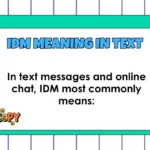
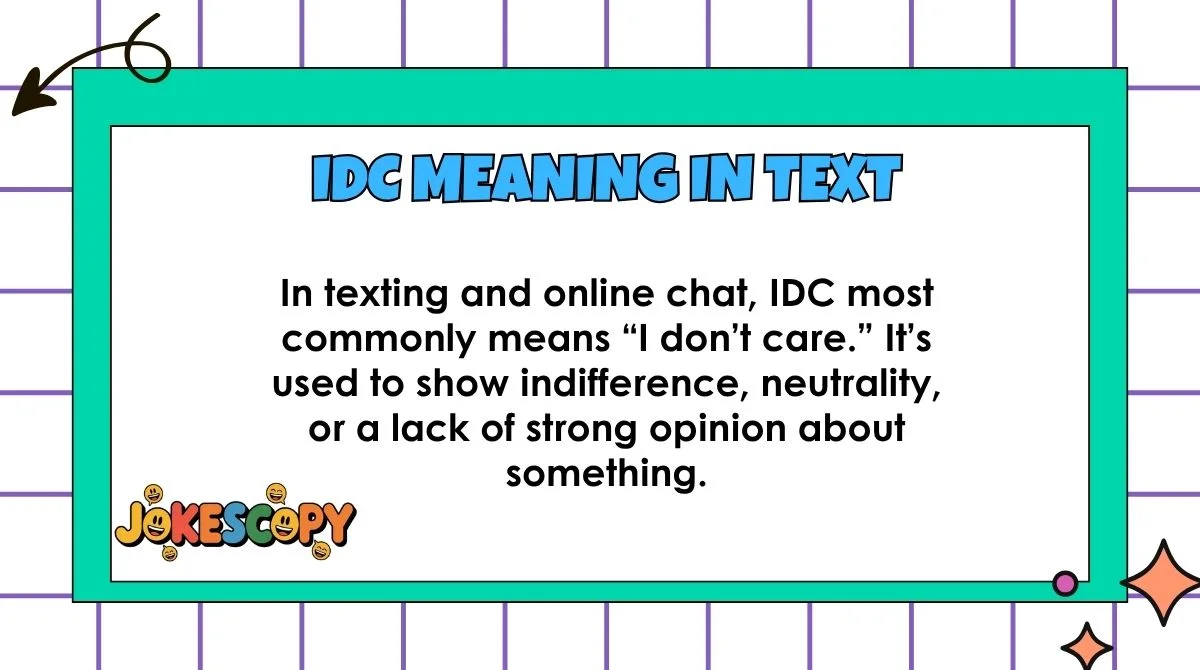
In texting and online chat, IDC most commonly means “I don’t care.” It’s used to show indifference, neutrality, or a lack of strong opinion about something.
The tone of IDC depends heavily on context. It can sound:
- Casual
- Honest
- Dismissive
- Playful
- Cold or blunt
That’s why many people misread it.
For example:
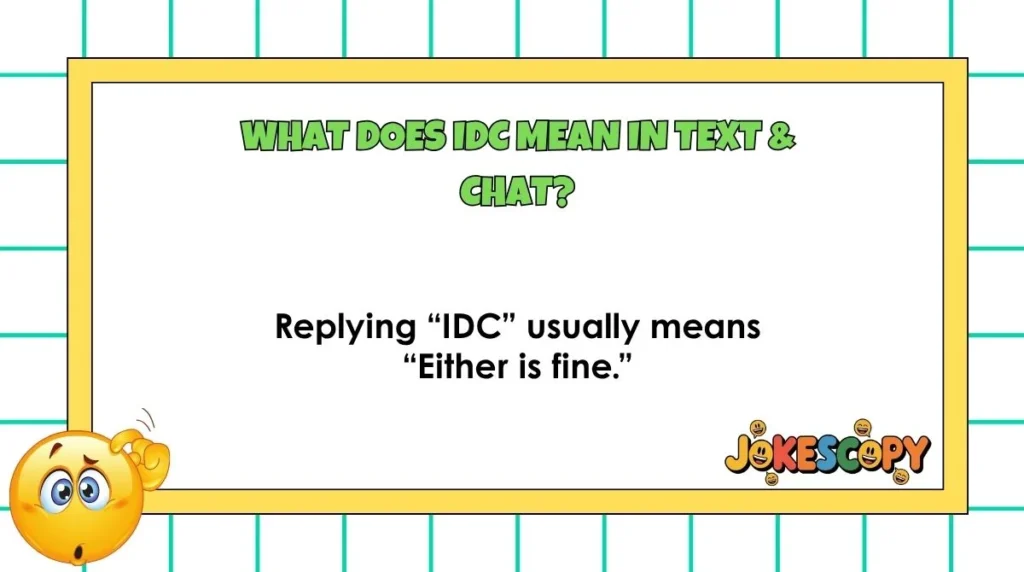
- If someone says, “Pizza or burgers?”
Replying “IDC” usually means “Either is fine.” - If someone shares feelings and gets “IDC” back, it may feel harsh.
IDC is often used when:
- The decision doesn’t matter to the sender
- The sender feels emotionally detached
- The sender wants to end a topic quickly
Because text lacks tone and facial cues, IDC can easily feel stronger than intended. That’s why some people add emojis or extra words to soften it.
Full Form, Stands For & Short Meaning of IDC
IDC stands for:
I Don’t Care
Simple, direct, and emotionally loaded.
Short meanings based on context:
- Neutral: “I’m fine with any option.”
- Detached: “This doesn’t matter to me.”
- Dismissive: “I’m not interested.”
- Casual: “Whatever works.”
Unlike longer responses, IDC removes explanation. That’s both its power and its weakness. It’s efficient—but can sound rude if used carelessly.
Origin, History & First Known Use of IDC
IDC didn’t start on social media. The phrase “I don’t care” has existed for centuries. The abbreviation IDC emerged with early digital communication.
Timeline:
- 1990s: Used in chat rooms and IRC
- Early 2000s: Popular in SMS texting
- 2010s: Spread across social media and messaging apps
- Today: Common in DMs, comments, and casual chats
As character limits and fast replies became normal, people shortened everyday phrases. IDC stuck because it’s easy to type, easy to understand, and emotionally flexible.
How People Use IDC in Daily Conversations
People use IDC in everyday chats for different reasons—not always negative ones.
Common real-life uses:
- Decision-making: “IDC, you choose.”
- Low-energy replies: “IDC anymore.”
- Playful tone: “IDC 😂 do what you want.”
- Emotional distance: “IDC tbh.”
Why people prefer IDC:
- Saves time
- Avoids long explanations
- Signals neutrality
- Ends conversations quickly
Still, tone matters. Adding context or emojis can completely change how IDC feels to the reader.
IDC Meaning Across WhatsApp, Instagram, TikTok & Snapchat
IDC behaves slightly differently across platforms.
- Often neutral or casual
- Used in private conversations
Example: - “Movie or series?”
“IDC 🙂”
- Can feel dismissive in comments
- Often used sarcastically
Example: - “IDC, but okay.”
TikTok
- Used in captions or replies to show indifference
- Sometimes ironic or humorous
Example: - “IDC what people think 😌”
Snapchat
- Short, blunt replies
- Tone depends on emoji use
Example: - “IDC 😭 just come.”
Different Meanings of IDC in Other Fields
Outside texting, IDC can mean very different things.
Common non-slang meanings:
- IDC (Industry): International Data Corporation
- IDC (Electrical): Insulation Displacement Connector
- IDC (Education): Instructional Design Center
⚠️ Important:
In casual chat or texting, IDC almost always means “I don’t care.” Other meanings apply only in professional or technical contexts.
Common Confusions, Mistakes & Wrong Interpretations
IDC is often misunderstood.
Common mistakes:
- Assuming it’s always rude
- Using it in serious conversations
- Sending it without context
- Ignoring emotional situations
How to avoid confusion:
- Add emojis 🙂😂
- Add a follow-up sentence
- Use softer alternatives when emotions are involved
Misuse can damage tone—even when no harm was intended.
Similar Terms, Alternatives & Related Slang
If IDC feels too harsh, try these alternatives:
Softer options:
- “Up to you”
- “Doesn’t matter to me”
- “Anything works”
- “I’m okay either way”
Related slang:
- IDK (I don’t know)
- NVM (Never mind)
- TBH (To be honest)
- IMO (In my opinion)
📌 Internal linking suggestion:
Link this article to pages like “IDK meaning in text” or “TBH meaning in chat” for better SEO.
Examples of IDC in Real Chat Situations
Quick examples for clarity:
- “Blue or black shirt?” → “IDC 👕”
- “Do you mind if I’m late?” → “IDC”
- “People are judging you.” → “IDC 😎”
- “Let’s talk.” → “IDC rn.”
Notice how emojis change the tone instantly.
How to Reply When Someone Says IDC
Your reply depends on context.
If they’re neutral:
- “Cool, I’ll decide then 👍”
If they sound annoyed:
- “Okay, let me know if you care later.”
If it feels rude:
- “Got it. Just checking.”
If it’s playful:
- “Haha alright 😄”
Reading emotional cues matters more than the word itself.
Is IDC Still Popular? Trends & Online Usage
Yes—IDC is still widely used.
Why it remains popular:
- Short and efficient
- Fits modern texting habits
- Expresses emotion quickly
- Works across platforms
While newer slang comes and goes, IDC stays relevant because it reflects a universal feeling: indifference. Its simplicity keeps it alive in digital conversations.
FAQs:
1. Is IDC rude in texting?
Not always. It depends on tone and context.
2. What does IDC mean from a girl or boy?
Same meaning—“I don’t care.” Emotion depends on delivery.
3. Can IDC mean something positive?
Yes. It can mean flexibility or openness.
4. Should I use IDC in professional chats?
No. It’s too casual and can sound dismissive.
5. Is IDC still slang or common language?
It’s casual slang but widely understood.
Conclusion
The IDC meaning in text is simple on the surface but powerful in practice. It usually stands for “I don’t care,” yet its tone can shift from relaxed to rude depending on context, timing, and emotional weight.
In casual chats, IDC often means flexibility or indifference. In serious conversations, it can feel cold or dismissive.
Understanding how and when to use IDC—and how to respond to it—helps avoid unnecessary misunderstandings.
Emojis, follow-up words, and awareness of the situation make all the difference. As long as texting exists, IDC will likely remain a quick, honest way to express how much—or how little—something matters.